
Hello comrades,
Development of Russia 1917 continues. Here is another update to follow its progress.
ManiFiesta 2026
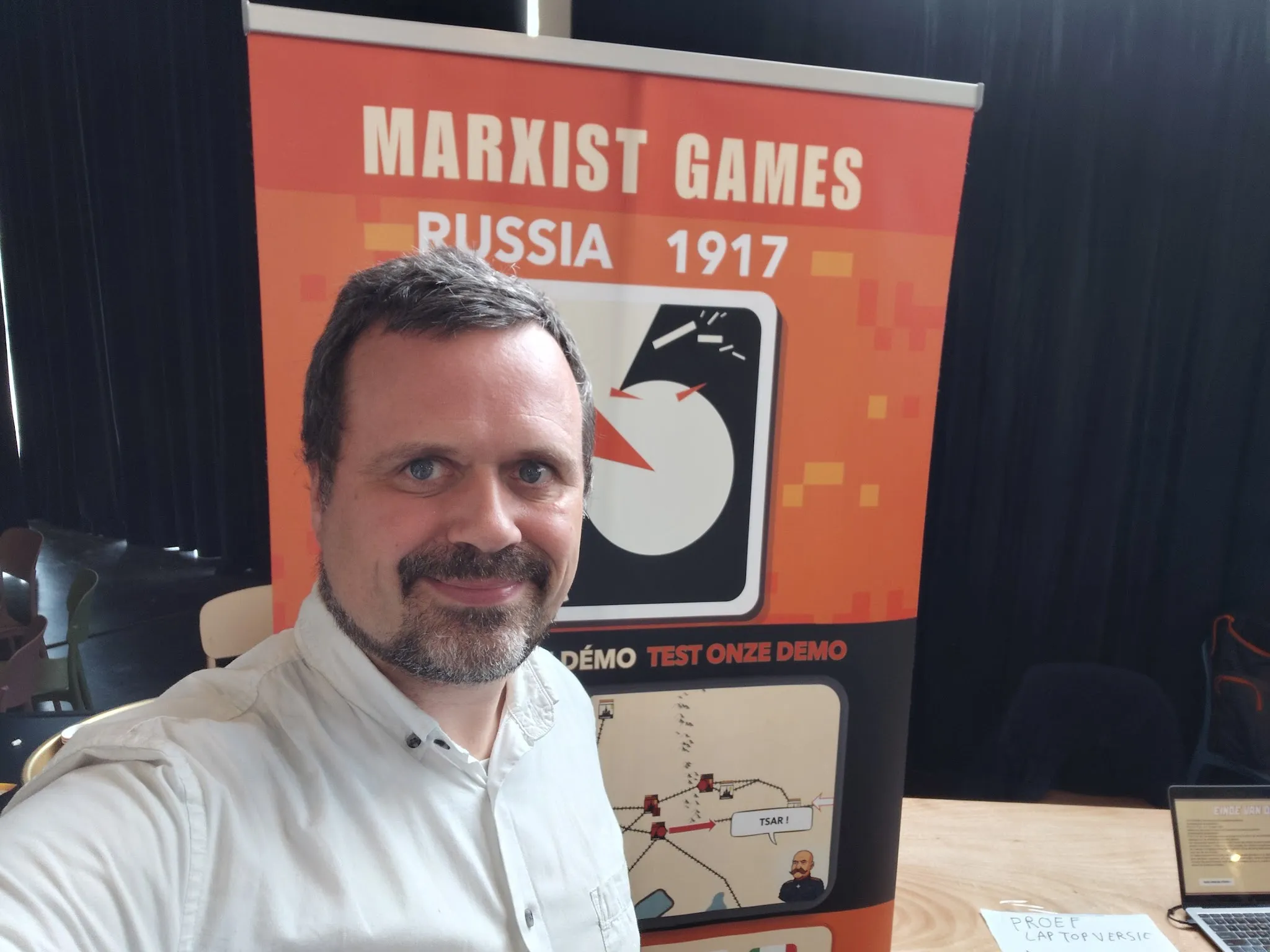
First of all, I would like to thank everyone I met at ManiFiesta, where I had the opportunity to present my game. The feedback was fantastic. It shows that, among a left-wing audience, there is real interest in persuasive games such as Russia 1917, which explores the Russian Revolution.
As I discussed with several people: everyone has heard of the Russian Revolution, but in the end, few people really know much about it. A video game can be an interesting gateway to discovering the revolution that most influenced the twentieth century.
An activist game or a persuasive game?
These conversations reinforce my belief that there is room for political games that aim to convince.
To explain the difference, there are already several political games or campaign games. A recent example is the French Socialist Party’s game: you control a little character whose job is to put up posters faster than the fascists can tear them down. It is a fun little game, even a slightly addictive one, but it is not intended to convince. In my view, it will not persuade someone who does not support the Socialist Party to vote for it. At best, it will remind them that putting up posters during a campaign matters.
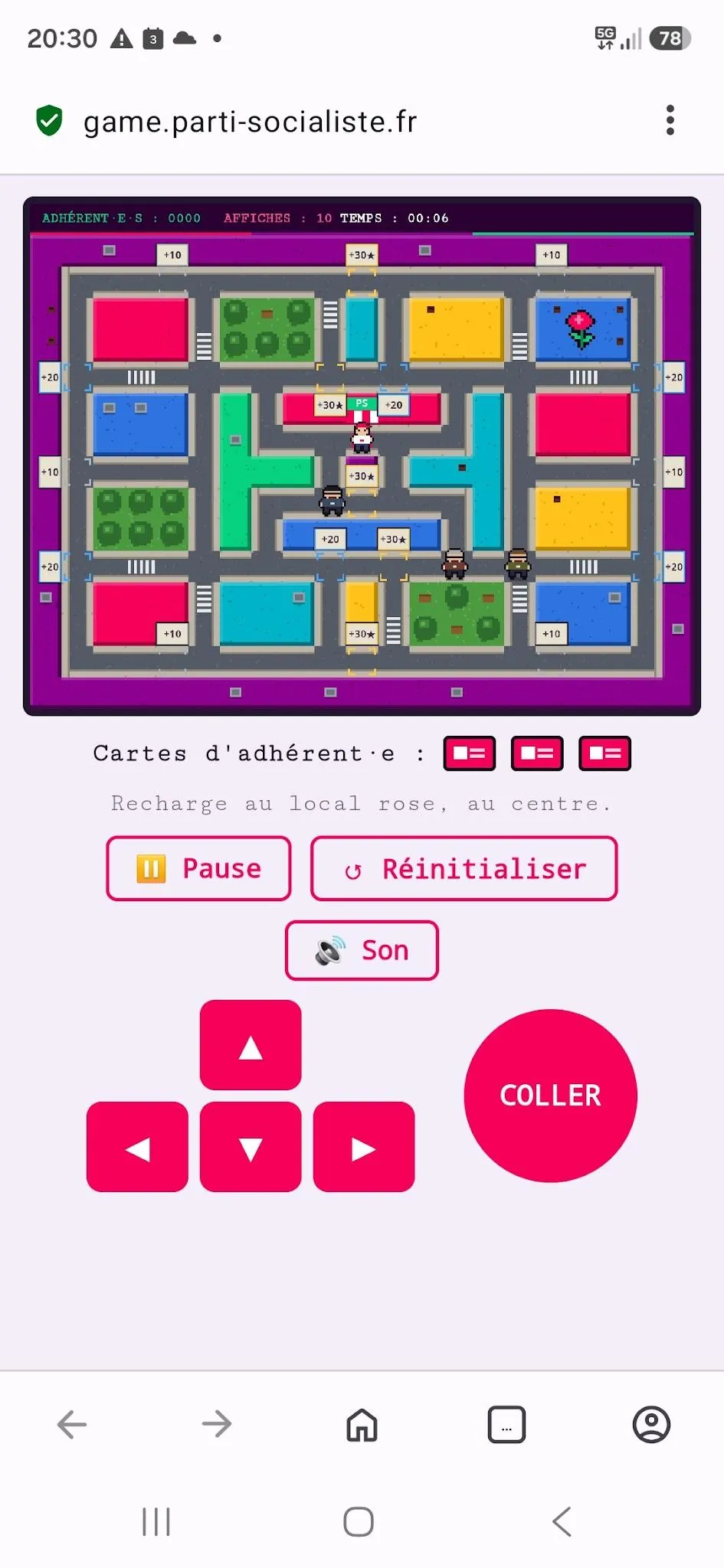
Screenshot of the French Socialist Party’s game.
My approach is different.
The philosophy behind Marxist Games, and particularly Russia 1917, is to recreate enough of the constraints of 1917 for the player to understand why certain decisions, which may seem strange or arbitrary a century later, make sense in the circumstances of the time.
But unlike games that are difficult to get into, the aim here is to offer a game with depth that remains very accessible. To achieve this, it is being designed for mobile, for example, with a limited number of possible actions, texts presented as dialogues and, above all, the option to skip certain passages or complex actions, such as political decisions, so as not to frustrate players who want to move quickly through the game.
How I use AI
I would also like to use this newsletter to talk about AI, as everyone seems to be doing these days ;-) Like many developers starting out today, I use AI to build my game. In the interests of transparency, I would like to explain a few aspects of how I use it. It is a broad topic: explaining how “I use AI” is almost as broad as explaining how “I use a computer”. So I will focus on two things: code and images.
Code and AI
First of all, I write my own code. With GDevelop, I build the game function by function. This does not let me produce a game as quickly as vibe coding would, but it gives me a great deal of control over what I am doing. Above all, I can read and understand my code.
During the holidays, I tried getting ChatGPT to produce a game through vibe coding, meaning telling the AI what I wanted without ever writing a line of code. I managed to build some impressive things, but at some point I found myself facing a black box: something was not working, and I could not understand what was causing the problem. Everything had to go through the AI, and I no longer had any control. Eventually, I put the project on hold because I felt less attached to it. A project you have commissioned without really building it is not one you become attached to.
By contrast, writing your own code makes you want to solve the problems. You are proud of what you have built. That is how I felt, at least: faced with something I had asked to be produced but did not understand, I gradually lost interest in it.
That does not stop me from continuing to use AI:
- to review my code, find a bug I do not understand or summarise how a long function works;
- to write code in certain very specific cases. Each time, I make sure I understand the added code so that I can then modify it myself. AI supports me, but does not take my place.
Images
From the start of the project, I wanted to introduce people to Russian revolutionary art through propaganda posters. In that respect, replacing them with AI-produced posters would be absurd: we need to respect the artists and the style of the period.
But in other cases, the game needs images that simply do not exist. New ones have to be created.
Let me give you two examples.
Here is a first poster by Viktor Deni, dating from 1919.
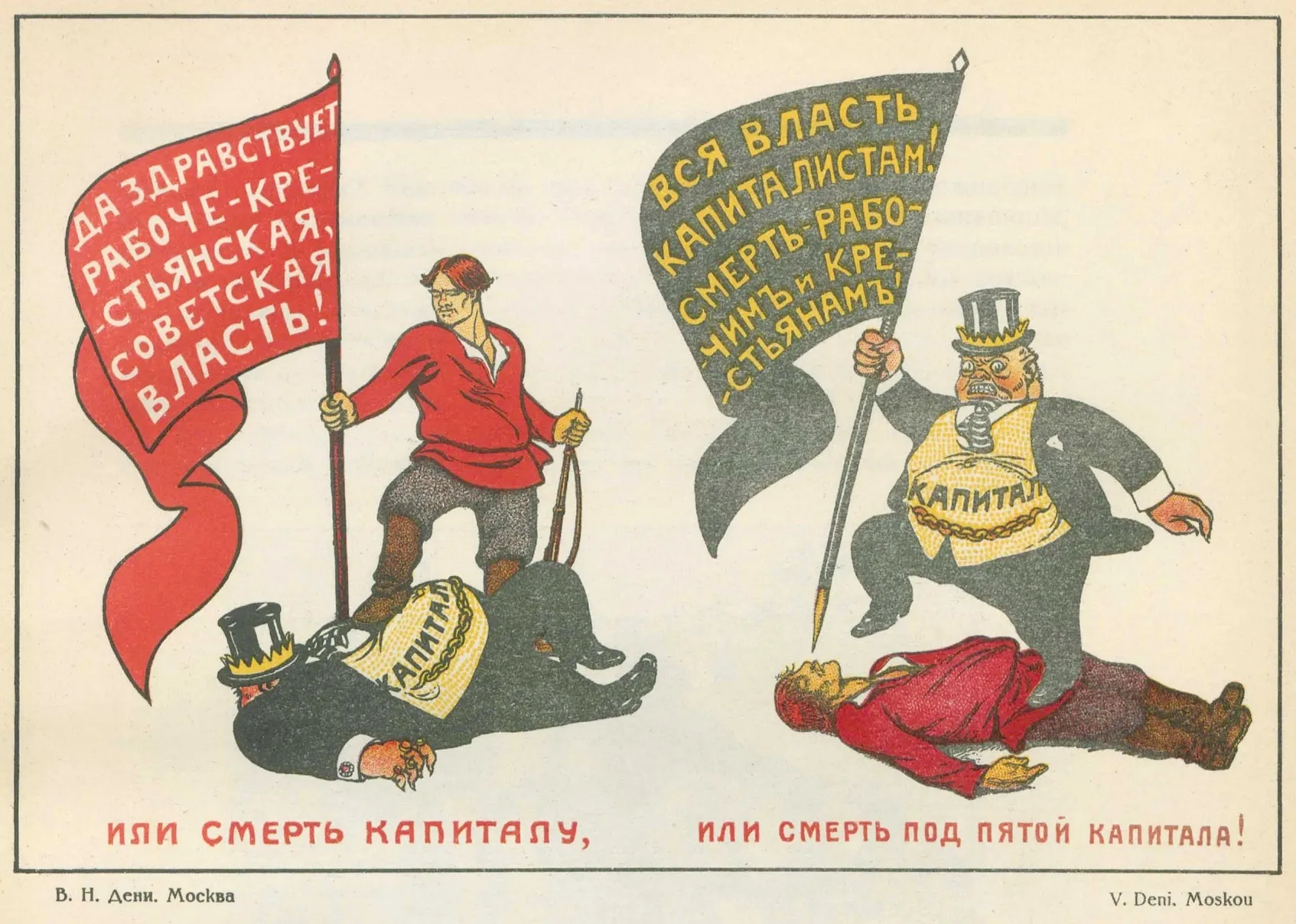
The capitalist has the word “capital”, written in Russian, across his belly. I want to use this image to illustrate the player’s failure. I could leave the Russian text, but the image would then become less accessible. So I asked AI to replace the Russian text with French, English and the game’s other languages.
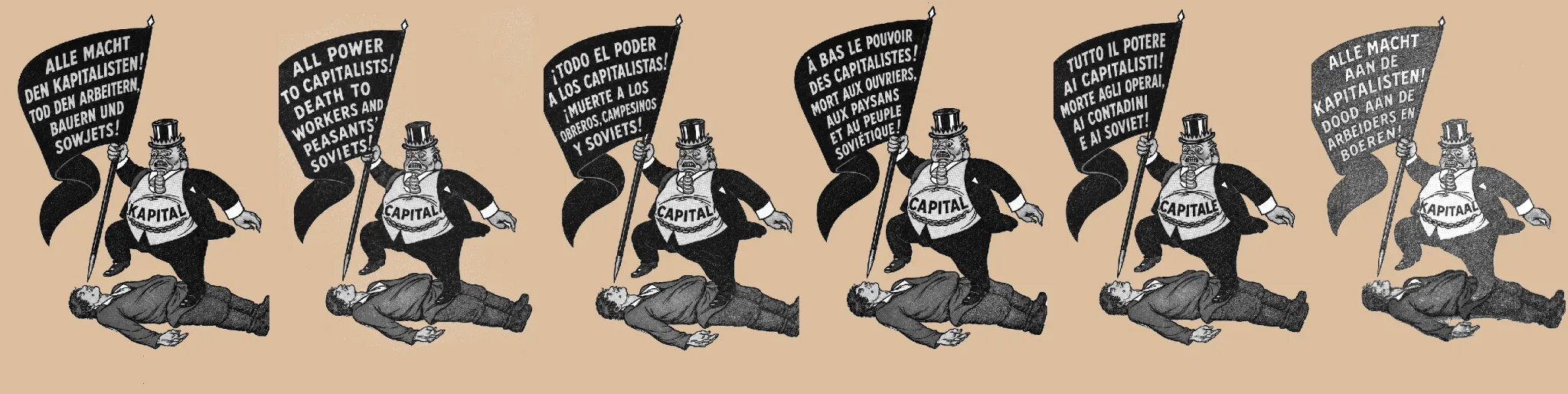
We have to be honest: the result works better for this purpose, but the final version of the game will state that this image was generated by AI, rather than simply retouched. It is not exactly the same image: sometimes a foot is in a different position, the character is a different size or the flag has a slightly different shape.
Nevertheless, I consider this a proportionate use of AI that helps people discover a style.
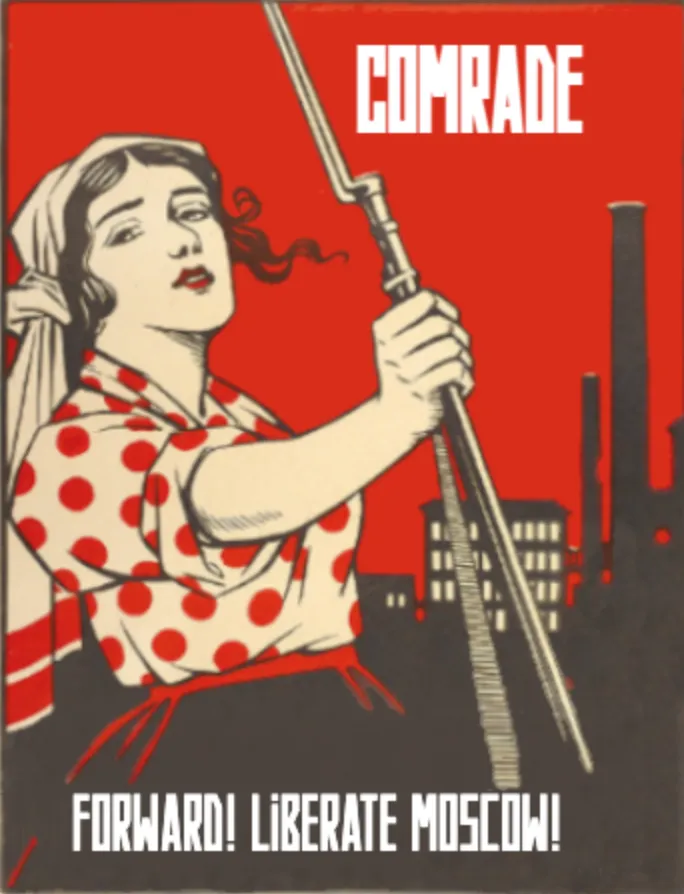
Conversely, in other cases I change the meaning of a poster without changing its visual content. For example, this famous recruitment poster by Moisei Brodaty, dating from 1920, carries the slogan:
“Women workers, take up your rifles!”
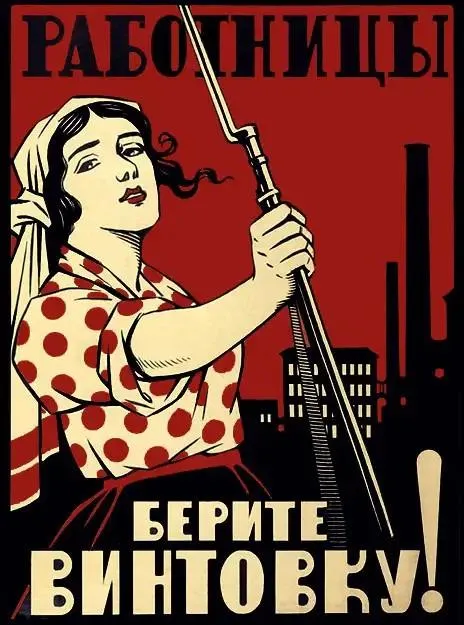
In the game, it becomes this image:
And when AI creates all the images?
My final example concerns images created entirely by AI.
My starting point was this:
I wanted historical figures such as Lenin, Trotsky or Zinoviev to face the player, speak to them and defend a point of view.
I first asked ChatGPT for a pixel art image of Lenin.
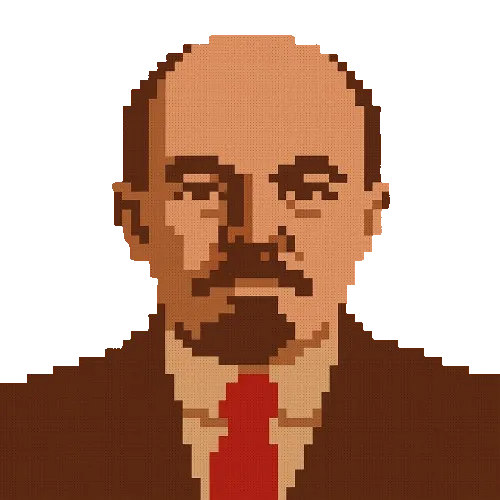
I liked this image. I placed it in a setting also created by ChatGPT: an office with a map of Russia in the background.
But I struggled to create other characters in the same style as Lenin.
Here is the result:
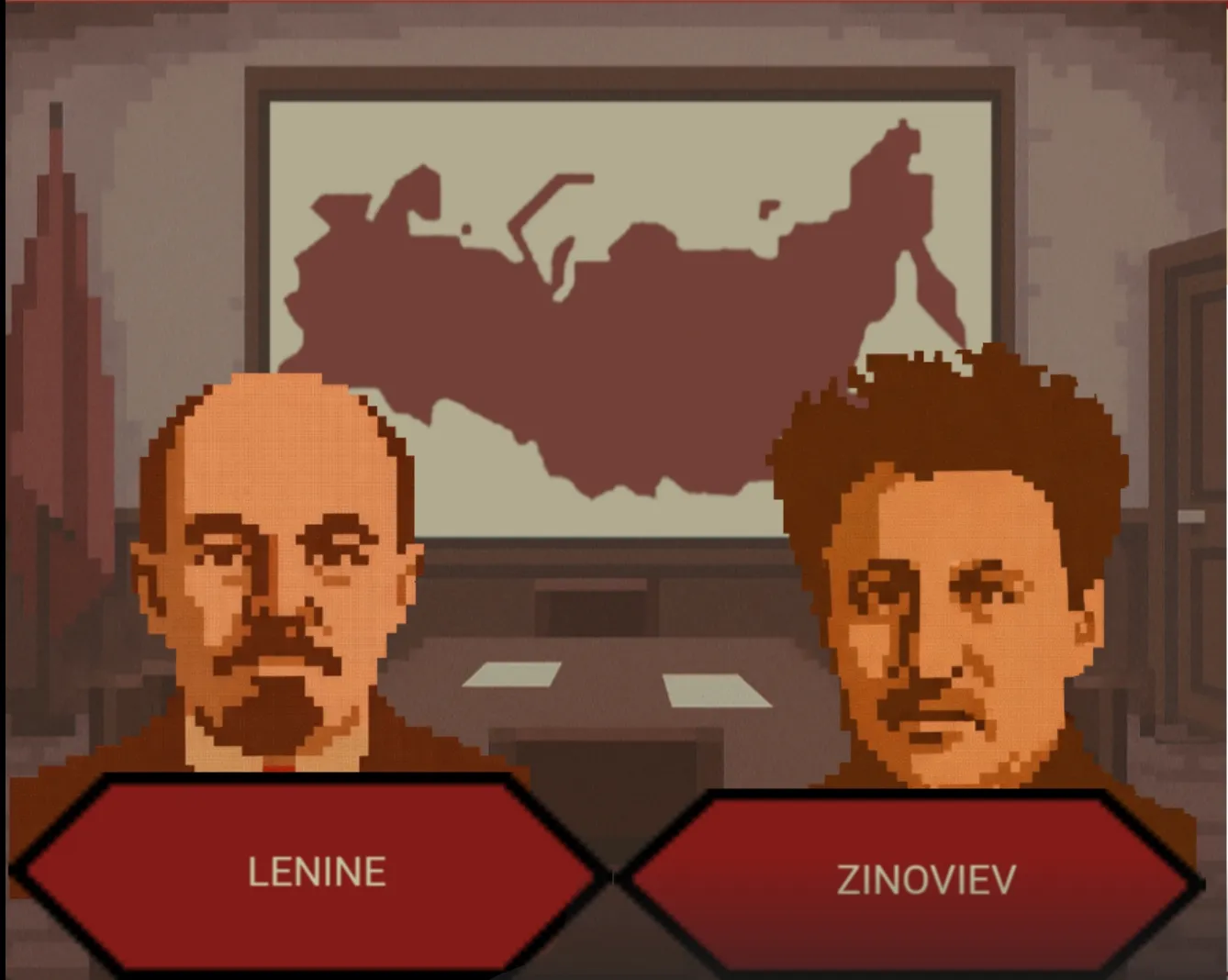
I spent weeks trying to find the right balance in pixel art.
But every time, something was wrong.
Then, during a conversation with a communications specialist, I realised that pixel art did not suit the game. It introduced a new visual style that did not fit with the rest.
So I had portraits of Lenin, Zinoviev, Trotsky and other figures recreated from period photographs, facing the camera. I then added a sepia and vintage effect.
The setting was also recreated by ChatGPT, and I then adjusted its colours in Photoshop.
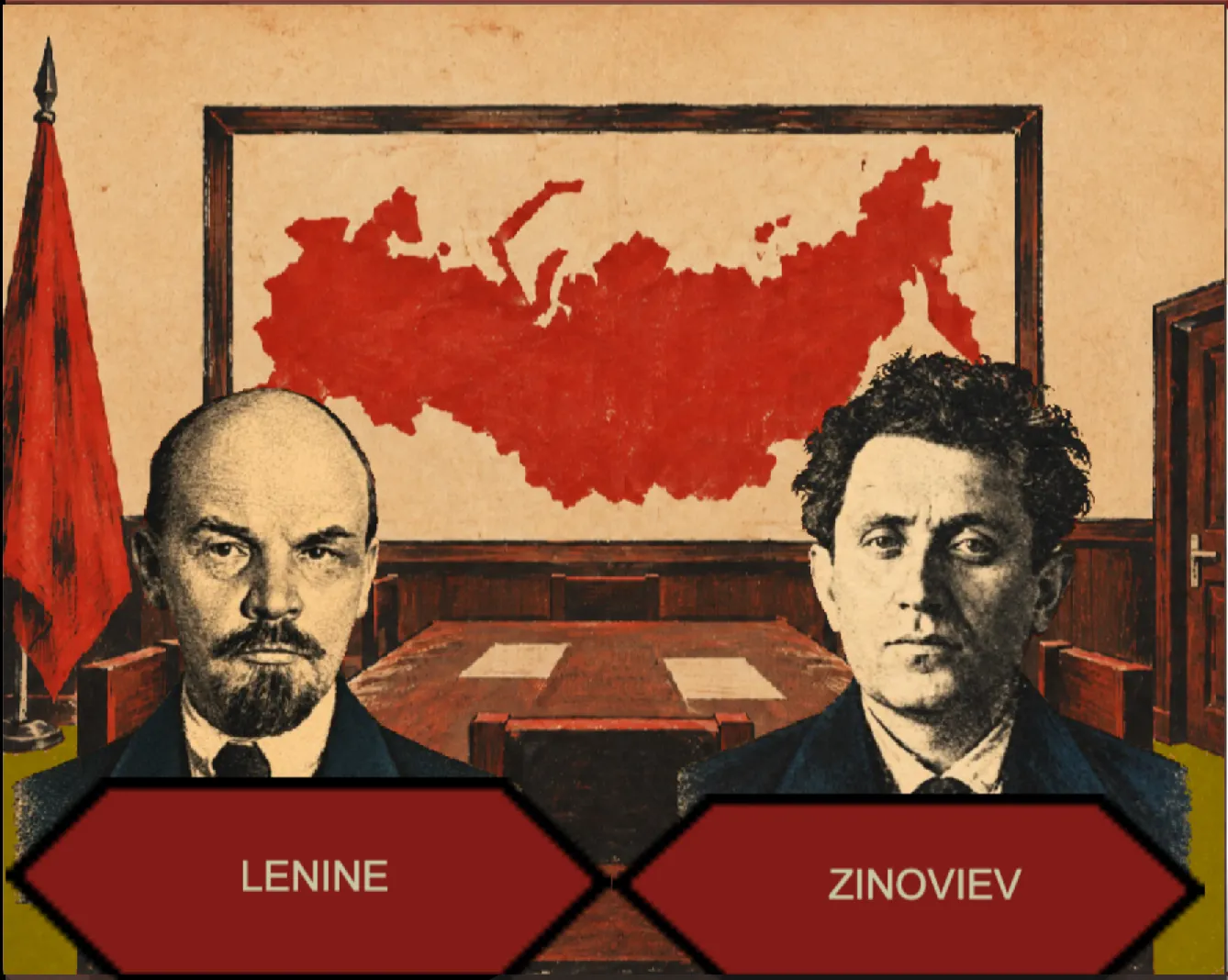
So, in the end, who created these images?
Was it ChatGPT, working like a graphic designer to produce the images? Or was it me, working as a graphic designer with AI and Photoshop to achieve the result I wanted?
I lean towards the second option. I see myself as a creator who uses tools: a computer, Photoshop or ChatGPT. We do not consider a computer or Photoshop to be the author of an image.
I look forward to hearing your thoughts.
Antoine for Marxist Games